
The AI-Powered Future of Coding
Artificial intelligence is transforming the way we develop software. AI-powered tools such as GitHub Copilot and SWE-agent are reshaping coding practices by automating repetitive tasks, offering real-time suggestions, and streamlining workflows. While these technologies boost productivity and efficiency, they also present challenges around code quality and security. In this post, we explore how AI is augmenting—rather than replacing—the human element in coding, and what this means for the future of software development.
AI Tools Revolutionizing Software Development
Modern AI-driven coding assistants have already begun to change our day-to-day work:
-
GitHub Copilot leverages machine learning models trained on vast amounts of code to suggest entire code snippets or even complete functions as you type. This can reduce time spent on boilerplate coding and help jumpstart complex projects.
-
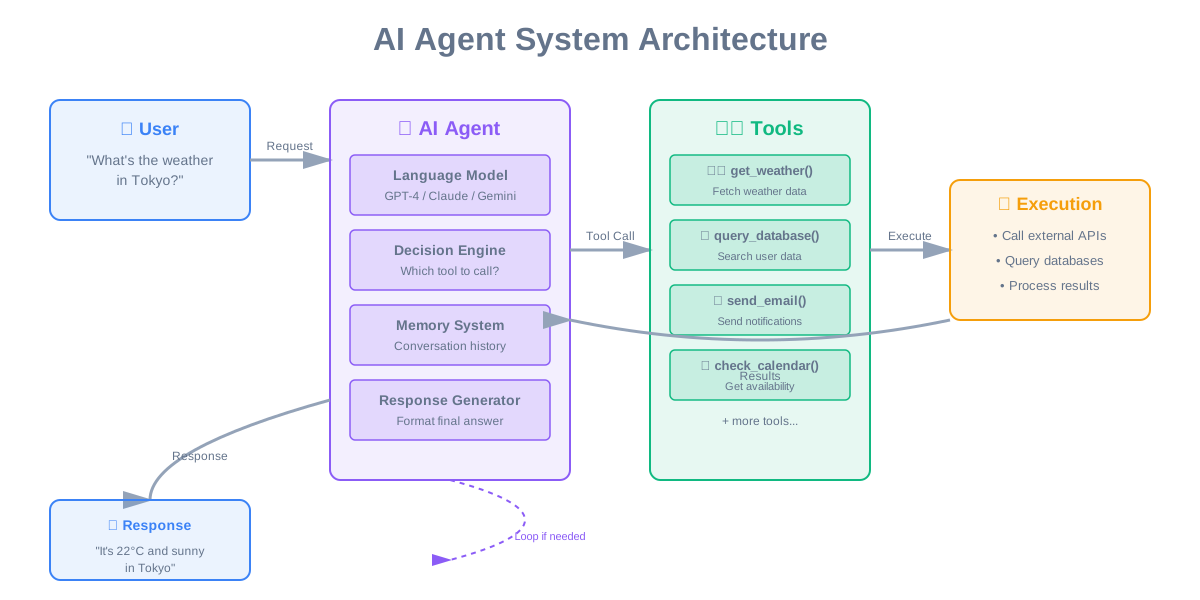
SWE-agent and similar emerging tools offer context-aware debugging, performance recommendations, and automated code optimizations. These systems can spot potential inefficiencies or errors before they become significant issues.
By integrating these tools into development environments, teams can focus more on solving complex problems and less on mundane, repetitive tasks.
Benefits of AI-Powered Coding
Increased Productivity and Efficiency
AI tools automate many of the routine aspects of coding. With features like real-time code completion and automated refactoring, developers can move faster from concept to deployment. This results in:
- Faster prototyping: Rapid generation of code snippets and templates allows for quicker iteration.
- Reduced manual work: Automation of common tasks means less time spent on debugging and more on creative problem-solving.
- Streamlined workflows: Integration into CI/CD pipelines speeds up testing and deployment cycles.
These benefits translate into shorter development cycles and faster time-to-market for new features.
Enhanced Collaboration and Learning
AI-powered tools not only assist in coding but also foster a collaborative environment:
- Knowledge Sharing: When developers use tools like Copilot, they can learn new techniques and coding patterns from the AI’s suggestions.
- Consistent Standards: Automated linting and coding style suggestions help maintain consistency across a codebase, which is especially valuable in distributed teams.
- Mentorship Augmentation: Senior developers can use AI tools as a teaching aid, highlighting best practices and advanced concepts to junior team members.
Challenges in the AI-Driven Coding Landscape
Ensuring Code Quality
While AI can generate code rapidly, it is not infallible:
- Context Limitations: AI suggestions are based on patterns learned from data, which may not perfectly fit the unique context of every project. Developers must always review and adjust the generated code.
- Subtle Bugs: Automated systems might miss edge cases or introduce subtle logic errors. Rigorous testing and code reviews remain essential to catch these issues.
Addressing Security Concerns
With speed comes the risk of overlooked vulnerabilities:
- Automated Code Vulnerabilities: AI tools might inadvertently suggest code that includes outdated libraries or insecure practices if they’re not properly configured.
- Over-Reliance on Automation: Relying solely on AI without human oversight can lead to security gaps. Continuous security assessments and manual audits are necessary to complement AI-driven development.
Ensuring robust security protocols and combining automated security scanning with traditional review processes is crucial in mitigating these risks. citeturn0news18
Augmenting, Not Replacing, Human Creativity
A common misconception is that AI will replace developers. In reality, AI is set to augment human creativity and expertise:
- Empowering Developers: AI takes over repetitive tasks, freeing up time for developers to focus on strategic design, problem-solving, and innovation.
- Enhancing Decision-Making: By providing data-driven insights and code suggestions, AI assists developers in making more informed decisions without compromising their creative input.
- Collaboration Between Human and Machine: The ideal future of coding is a symbiotic relationship where human ingenuity and AI efficiency work in tandem. Developers remain the final decision-makers, refining and contextualizing AI outputs to suit real-world requirements.
This partnership allows teams to achieve greater innovation and maintain high standards of quality and security.
Looking Ahead: The Future of AI in Coding
As AI technologies continue to evolve, we can expect further integration of AI into every stage of the software development lifecycle:
- Deeper Integration in CI/CD Pipelines: AI tools will increasingly automate complex testing and deployment processes, further reducing time-to-market.
- Advanced Code Analysis: Future AI systems may offer predictive analytics to foresee potential bugs or security vulnerabilities before they occur.
- More Intelligent Assistance: As machine learning models improve, AI will provide more nuanced, context-aware suggestions, acting as an indispensable partner to developers.
The focus will remain on augmenting human skills—ensuring that while machines handle the heavy lifting of routine tasks, developers continue to drive innovation, creativity, and critical oversight.
Conclusion
The AI-powered future of coding promises to revolutionize software development by enhancing productivity, streamlining processes, and fostering innovation. However, the human element remains irreplaceable. Developers must balance the efficiency gains of AI tools with diligent code reviews, rigorous testing, and proactive security measures.
By embracing AI as a collaborative partner, software teams can unlock new levels of performance and creativity—ensuring that the future of coding is not just faster and more efficient, but also more innovative and secure.
Comments & Discussion
Join the conversation! Share your thoughts, ask questions, or provide feedback below.