You’re debugging a slow search feature. Users are complaining it takes 3 seconds to find anything. You’ve tried everything—better servers, caching, database optimization. Nothing works.
Then you realize the problem isn’t your infrastructure. It’s your algorithm.
You’re scanning through a sorted array linearly instead of using the structure to your advantage. One small change—switching to binary search—drops response time to 50 milliseconds. That’s a 60x improvement from understanding how arrays actually work.
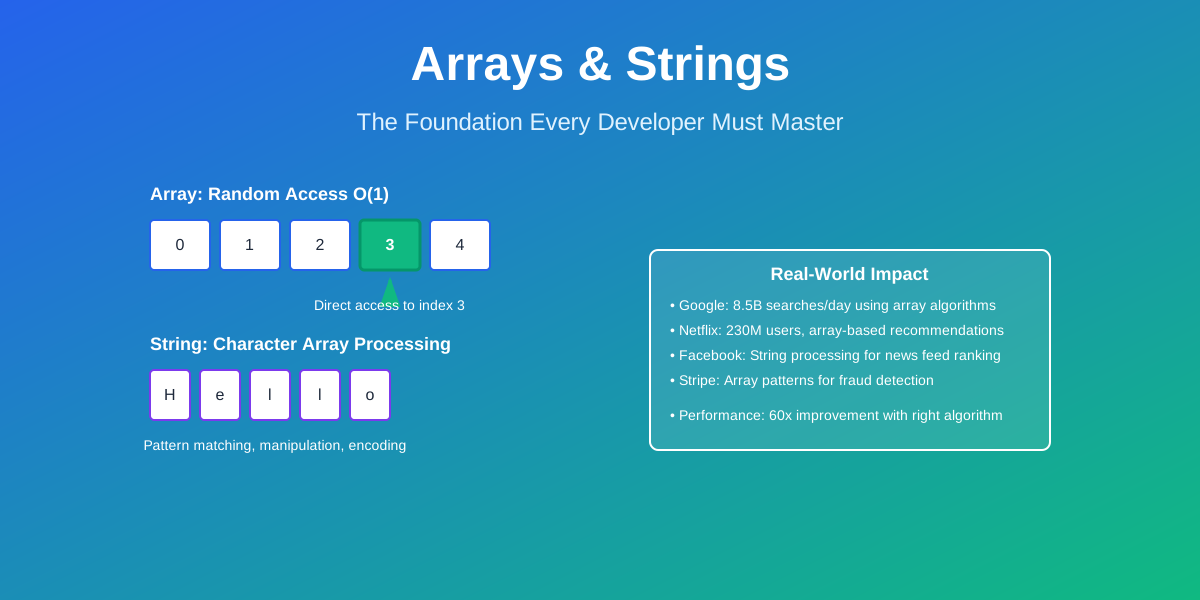
This isn’t just theory. Google processes 8.5 billion searches daily using array-based algorithms. Facebook’s news feed ranking depends on string processing at massive scale. Netflix’s recommendation engine? Built on array manipulation techniques that analyze viewing patterns across 230 million subscribers.
Here’s why arrays and strings aren’t just “basic” data structures—they’re the foundation that everything else builds on.
Why Arrays and Strings Matter More Than You Think
I used to think arrays were simple. Just a list of elements, right? Then I joined a team building real-time analytics. We were processing millions of events per second, and our array operations were the bottleneck.
That’s when I learned arrays aren’t just about storage—they’re about access patterns, memory locality, and algorithmic thinking. The difference between O(n²) and O(n) isn’t academic when you’re processing terabytes of data.
Every major tech company has built their core systems around clever array and string manipulation:
Google’s PageRank algorithm uses sparse arrays to represent the web graph efficiently. Amazon’s recommendation engine processes user behavior stored in massive arrays. Stripe’s fraud detection analyzes transaction patterns using string matching algorithms that run in real-time.
The patterns you learn with arrays and strings—two pointers, sliding window, prefix sums—show up everywhere in system design and advanced algorithms.
The Building Blocks: Arrays
Think of arrays as the Swiss Army knife of programming. Simple concept, infinite applications.
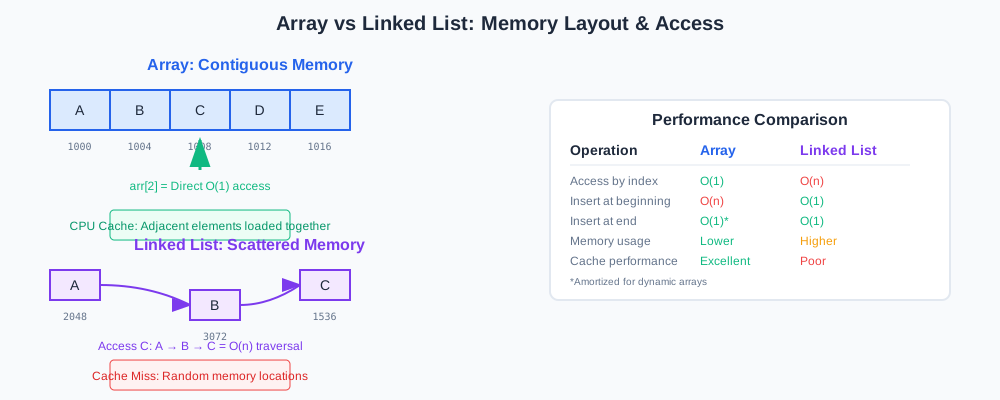
An array gives you random access in O(1) time. Need the 1000th element? No problem. Compare that to linked lists where you’d traverse 999 elements first. This seemingly small difference changes everything about how you design algorithms.
Memory Layout Matters
Arrays store elements contiguously in memory. This isn’t just an implementation detail—it’s why arrays are fast. When you access arr[0], the CPU loads nearby elements into cache automatically. Accessing arr[1] next? It’s already in cache.
This is why iterating through an array is blazingly fast compared to jumping around in memory with pointers. Netflix leverages this for their recommendation engine, processing user viewing arrays sequentially to maximize cache hits.
Dynamic vs Static Arrays
Most languages give you dynamic arrays (Python lists, JavaScript arrays, Java ArrayLists). They handle resizing automatically, but there’s a cost. When an array outgrows its space, it allocates a new, larger array and copies everything over.
Instagram learned this the hard way during their early scaling. Their photo metadata arrays kept triggering expensive resize operations during traffic spikes. The solution? Pre-allocating arrays based on expected load and using array pools to avoid constant allocation.
String Processing: More Complex Than It Looks
Strings might seem like simple character arrays, but they’re surprisingly complex. Different languages handle them differently, and the performance implications are huge.
Immutability Challenges
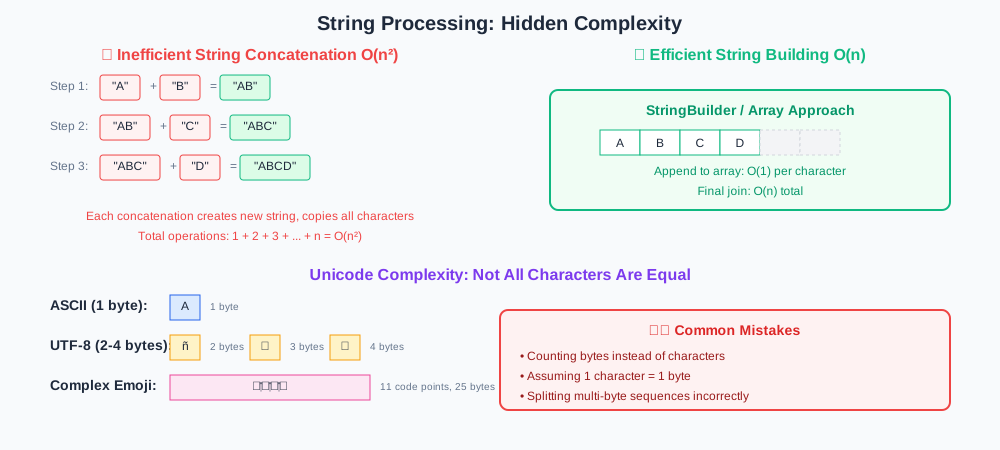
In languages like Java and Python, strings are immutable. Every “modification” creates a new string. This code looks innocent but is actually O(n²):
# This is O(n²) - don't do this!
result = ""
for word in words:
    result += word  # Creates new string each time
Facebook’s early PHP codebase hit this exact problem when building user profiles. Concatenating user data was creating thousands of temporary strings, causing memory pressure. They switched to array-based building (like StringBuilder in Java) and saw immediate performance gains.
Unicode and Encoding
Modern applications are global, which means Unicode. A single “character” might be multiple bytes. The emoji “👨👩👧👦” (family) is actually 11 Unicode code points combined.
Twitter learned this when implementing their 280-character limit. They couldn’t just count bytes or even Unicode code points—they had to count “grapheme clusters” (what users perceive as characters). Their solution involved sophisticated string processing that handles complex Unicode normalization.
Essential Patterns You Need to Know
The real power of arrays and strings comes from recognizing patterns. These aren’t just interview tricks—they’re production techniques used by every major tech company.
Two Pointers Technique
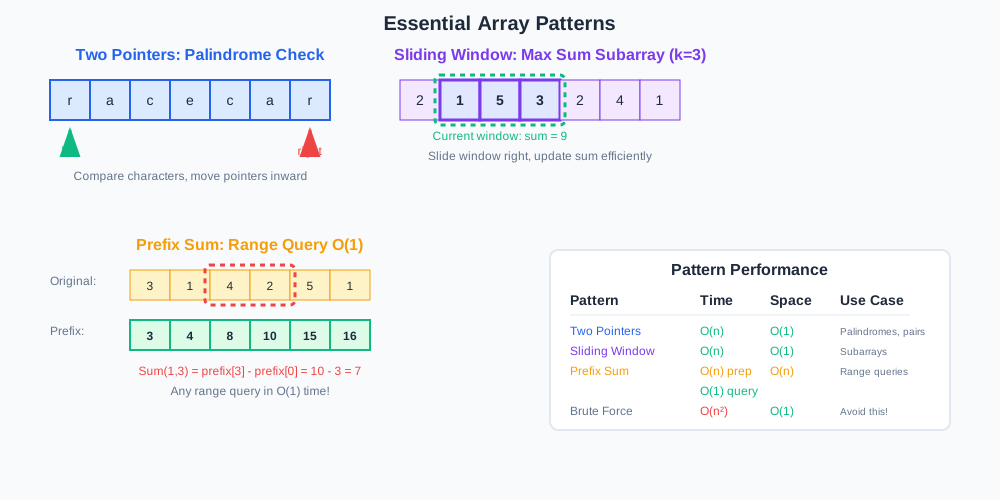
The two pointers pattern is everywhere. You maintain two indices moving through your data structure, often from opposite ends or at different speeds.
Classic Example: Palindrome Check
Two Pointers Palindrome Check
LinkedIn uses this pattern for validating user input in real-time. When users enter company names or skills, they check for palindromic patterns and common misspellings using two-pointer string comparison.
Real-World Application: Container With Most Water
Uber’s surge pricing algorithm uses a variation of this pattern. They analyze demand patterns across different areas (represented as heights in an array) to find the optimal pricing zones that maximize revenue while maintaining service quality.
Sliding Window Technique
The sliding window pattern maintains a “window” of elements and slides it across your array or string. It’s perfect for problems involving subarrays or substrings.
Finding Maximum Sum Subarray
Sliding Window Maximum Sum
Netflix uses sliding window algorithms to analyze viewing patterns. They look at user engagement over time windows to determine when to recommend new content or send notifications for maximum impact.
Longest Substring Without Repeating Characters
Longest Substring Without Repeating Characters
Spotify applies this pattern to playlist generation. They ensure song recommendations don’t repeat artists or genres within a certain window, creating more diverse listening experiences.
Prefix Sums and Cumulative Arrays
Sometimes you need to answer range queries efficiently. Prefix sums let you calculate the sum of any subarray in O(1) time after O(n) preprocessing.
Prefix Sum Range Query
Amazon’s inventory management system uses prefix sums to quickly calculate total stock levels across warehouse regions. Instead of summing inventory counts repeatedly, they maintain cumulative totals for instant regional reporting.
String Matching and Processing
String algorithms power some of the most critical systems in tech. Search engines, DNA sequencing, plagiarism detection—they all rely on efficient string processing.
Pattern Matching Algorithms
KMP (Knuth-Morris-Pratt) Algorithm
KMP String Matching
Google’s search engine uses advanced string matching algorithms to find query patterns in billions of web pages. While they’ve moved beyond basic KMP, the core principles of avoiding redundant comparisons remain central to their text processing pipeline.
Rabin-Karp Rolling Hash
Rabin-Karp Rolling Hash
GitHub uses rolling hash techniques for their diff algorithms. When you view file changes, they’re using string matching to efficiently identify which lines changed, added, or removed between versions.
String Transformation Problems
Edit Distance (Levenshtein Distance)
Edit Distance
Grammarly’s core spell-check functionality relies on edit distance algorithms. They calculate the minimum number of operations needed to transform a misspelled word into the correct spelling, enabling real-time suggestions as you type.
Performance Considerations and Optimization
Understanding the performance characteristics of array and string operations is crucial for building scalable systems.
Time Complexity Patterns
Array Operations:
- Access by index: O(1)
- Search (unsorted): O(n)
- Search (sorted): O(log n) with binary search
- Insertion at end: O(1) amortized
- Insertion at beginning: O(n)
- Deletion: O(n) for maintaining order
String Operations:
- Character access: O(1)
- Concatenation: O(n) for immutable strings
- Substring: O(k) where k is substring length
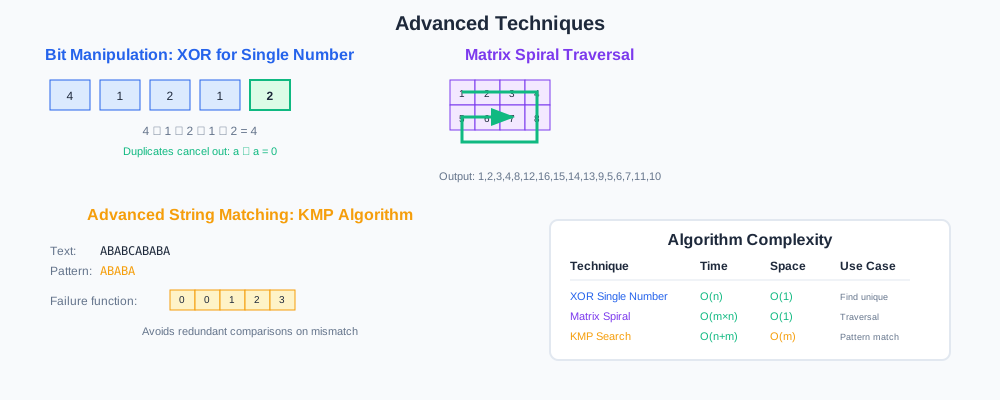
- Pattern matching: O(n×m) naive, O(n+m) with KMP
Memory Optimization Techniques
Array Pooling
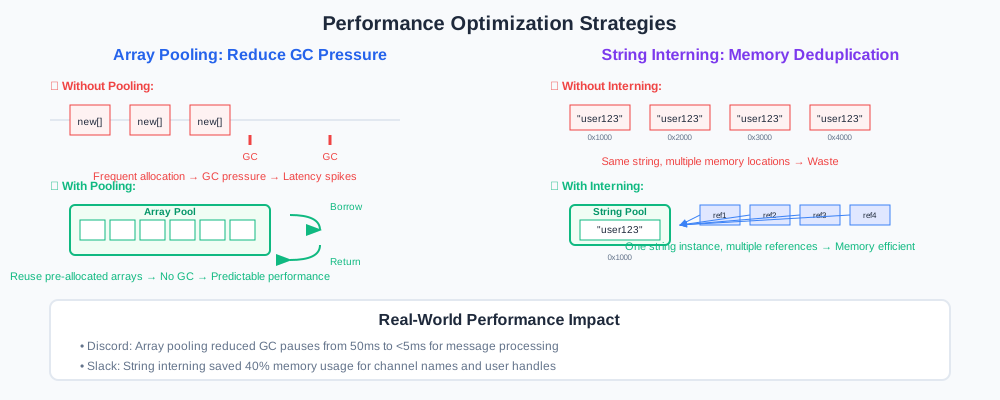
High-performance applications often use array pools to avoid garbage collection pressure. Instead of constantly allocating and deallocating arrays, they reuse pre-allocated ones.
Discord uses this technique for their real-time messaging. With millions of messages per second, they can’t afford the latency spikes from garbage collection. Array pooling keeps their message processing smooth and predictable.
String Interning
For applications that work with many duplicate strings, interning can save significant memory. Java’s string pool is a built-in example, but you can implement custom interning for domain-specific data.
Slack interns channel names, user handles, and common message patterns. Since the same strings appear repeatedly across millions of messages, this saves substantial memory in their message storage systems.
Common Pitfalls and How to Avoid Them
Even experienced developers make mistakes with arrays and strings. Here are the traps I’ve seen (and fallen into) most often.
Off-by-One Errors
The classic mistake. Arrays are zero-indexed, but human thinking is one-indexed. This disconnect causes bugs that can be subtle and hard to catch.
# Wrong: misses last element
for i in range(len(arr) - 1):
    process(arr[i])

# Right: processes all elements
for i in range(len(arr)):
    process(arr[i])
Airbnb had a production bug where their search algorithm was missing the last property in certain result sets due to an off-by-one error in their pagination logic. The fix was simple, but it took hours to identify because the bug only appeared with specific search parameters.
String Concatenation Performance
Building strings in loops is a performance killer in many languages. The innocent-looking code creates O(n²) complexity:
// Inefficient: O(n²) time complexity
String result = "";
for (String word : words) {
    result += word;  // Creates new string each time
}

// Efficient: O(n) time complexity
StringBuilder sb = new StringBuilder();
for (String word : words) {
    sb.append(word);
}
String result = sb.toString();
Array Bounds and Buffer Overflows
C and C++ developers know this pain, but it can happen in other languages too. Always validate array indices, especially when they come from user input or external data.
Zoom had a security vulnerability related to array bounds checking in their client software. Malformed meeting data could cause buffer overflows, potentially allowing code execution. The fix required adding bounds checking throughout their array processing code.
Unicode and Character Encoding Issues
Assuming one character equals one byte is a recipe for bugs in international applications. Modern applications must handle Unicode correctly.
WhatsApp processes messages in dozens of languages and scripts. Their string processing algorithms had to be carefully designed to handle variable-width character encodings, right-to-left text, and complex emoji sequences.
Advanced Techniques and Patterns
Once you’ve mastered the basics, these advanced patterns will set you apart.
Bit Manipulation with Arrays
Sometimes you can use bit operations to solve array problems more efficiently. This is especially powerful when dealing with boolean arrays or sets of small integers.
Finding Single Number in Array
Single Number Using XOR
Dropbox uses bit manipulation techniques in their deduplication algorithms. When comparing file chunks, they use XOR operations on hash arrays to quickly identify unique and duplicate segments.
Multi-dimensional Array Techniques
Matrix Traversal Patterns
Matrix Spiral Traversal
Google Maps uses sophisticated matrix traversal algorithms for route planning. They represent road networks as weighted matrices and use various traversal patterns to find optimal paths while considering traffic, road conditions, and user preferences.
Advanced String Algorithms
Suffix Arrays and Trees
For complex string processing, suffix arrays and suffix trees provide powerful capabilities. They’re used in bioinformatics, text compression, and advanced search systems.
Z-Algorithm for Pattern Matching
Z-Algorithm Pattern Matching
Elasticsearch uses advanced string matching algorithms like the Z-algorithm for full-text search. These algorithms enable fast pattern matching across massive document collections.
Real-World Applications and Case Studies
Let’s look at how major companies apply these concepts in production systems.
Google: Search Autocomplete
Google’s autocomplete processes billions of queries using sophisticated array and string algorithms. They maintain sorted arrays of popular queries and use binary search with string matching to provide instant suggestions.
The challenge isn’t just speed—it’s handling typos, multiple languages, and personalization. They use edit distance algorithms to suggest corrections and maintain separate arrays for different user contexts.
Netflix: Content Recommendation
Netflix’s recommendation engine processes viewing history stored in massive arrays. They use sliding window techniques to analyze recent viewing patterns and two-pointer algorithms to find similar user preferences.
Their string processing handles movie titles, descriptions, and metadata in dozens of languages. They use advanced string matching to group similar content and identify trending topics from user reviews.
Facebook: News Feed Ranking
Facebook’s news feed algorithm processes arrays of user interactions, post engagement metrics, and social connections. They use prefix sum techniques to quickly calculate engagement scores over time windows.
String processing handles post content, comments, and hashtags. They use pattern matching algorithms to detect spam, identify trending topics, and group related discussions.
Stripe: Fraud Detection
Stripe analyzes transaction patterns using array-based algorithms. They maintain sliding windows of recent transactions and use two-pointer techniques to identify suspicious patterns.
Their string processing validates payment information, detects card number patterns, and matches against fraud databases. They use rolling hash algorithms to efficiently compare transaction signatures.
Interview Preparation and Problem-Solving
Arrays and strings dominate technical interviews because they test fundamental problem-solving skills. Here’s how to approach them systematically.
Problem Recognition Patterns
Two Pointers Problems:
- Palindrome checking
- Pair sum problems
- Removing duplicates
- Merging sorted arrays
Sliding Window Problems:
- Maximum/minimum subarray problems
- Substring problems with constraints
- Fixed-size window analysis
String Matching Problems:
- Pattern searching
- Anagram detection
- Substring manipulation
Problem-Solving Framework
- Understand the constraints: Array size, character set, time limits
- Identify the pattern: Does it fit two pointers, sliding window, or another technique?
- Consider edge cases: Empty arrays, single elements, duplicate values
- Optimize step by step: Start with brute force, then optimize
- Test thoroughly: Include edge cases and large inputs
Common Interview Questions
Array Problems:
- Two Sum and its variations
- Maximum subarray (Kadane’s algorithm)
- Rotate array
- Merge intervals
- Product of array except self
String Problems:
- Valid palindrome
- Longest common prefix
- Group anagrams
- String to integer (atoi)
- Longest substring without repeating characters
Key Takeaways and Next Steps
Arrays and strings are the foundation of everything else in computer science. Master these concepts, and you’ll find advanced topics much easier to understand.
What makes arrays and strings powerful:
- Simplicity with depth: Easy to understand, infinite applications
- Performance predictability: Clear time and space complexity
- Universal patterns: Techniques transfer to other data structures
- Real-world relevance: Every major system uses these concepts
Essential patterns to remember:
- Two pointers for paired operations and palindromes
- Sliding window for subarray and substring problems
- Prefix sums for range queries
- String matching algorithms for pattern detection
Common pitfalls to avoid:
- Off-by-one errors in indexing
- Inefficient string concatenation
- Unicode and encoding assumptions
- Array bounds violations
The techniques you learn here—algorithmic thinking, pattern recognition, optimization strategies—will serve you throughout your career. Whether you’re building the next Google search algorithm or optimizing a simple web application, these fundamentals matter.
What’s Next?
Now that you understand arrays and strings, you’re ready for more complex data structures. The patterns you’ve learned here will appear in:
- Linked Lists: Pointer manipulation builds on array indexing concepts
- Stacks and Queues: Array-based implementations are common and efficient
- Hash Tables: String hashing and array-based collision resolution
- Trees: Array representations and traversal patterns
Want to dive deeper into specific patterns or discuss how these concepts apply to your projects? Reach out—I’d love to hear about the problems you’re solving.
Remember: every expert was once a beginner who mastered the fundamentals. Arrays and strings are your foundation. Build it strong.
Comments & Discussion
Join the conversation! Share your thoughts, ask questions, or provide feedback below.