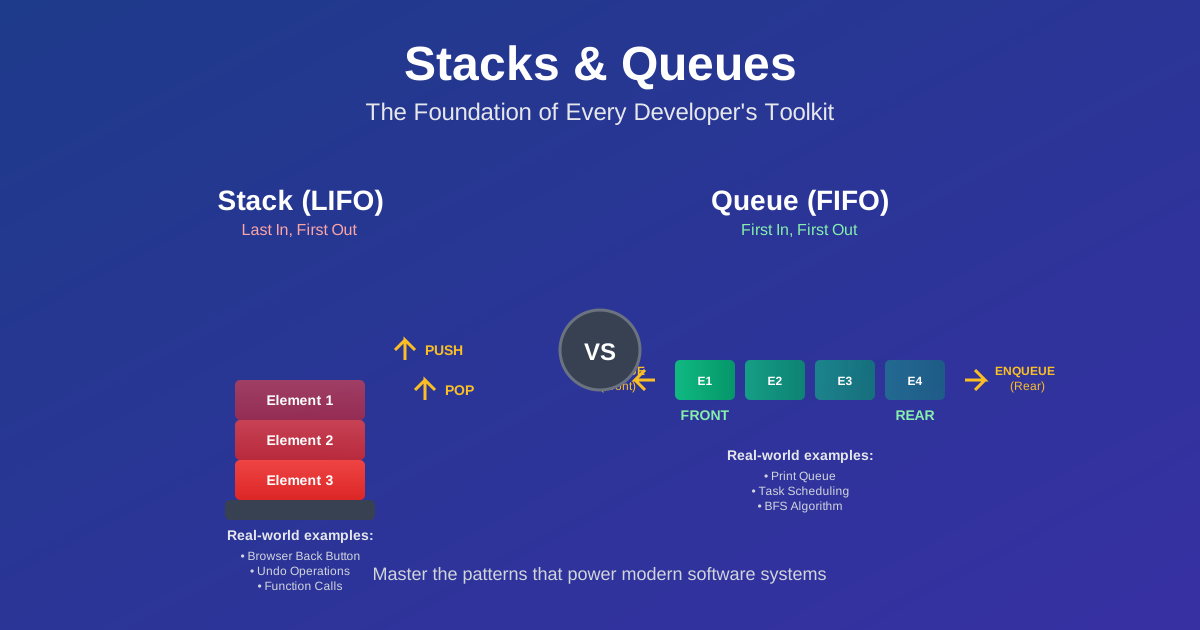
Stacks & Queues: The Foundation of Every Developer’s Toolkit
Ever wondered how your browser remembers where to go when you hit the back button? Or how your printer manages multiple documents without mixing them up? You’re looking at stacks and queues in action—two of the most elegant and practical data structures in computer science.
Here’s the thing: these aren’t just academic concepts you memorize for interviews. Stacks and queues are the invisible workhorses behind almost every system you use daily. Your function calls, your undo operations, your task scheduling, even the way your CPU manages processes—it’s all stacks and queues under the hood.
In this guide, we’ll explore these fundamental structures through real-world examples, practical applications, and the kind of insights that make you think “Oh, that’s how it works!” No dry theory here—just practical knowledge you can use immediately.
The Problem: Managing Order in Chaos
Picture this: you’re building a text editor and users want an undo feature. Or you’re designing a task scheduler that needs to process jobs fairly. Maybe you’re implementing a calculator that handles complex expressions with parentheses.
All these scenarios share a common challenge: managing the order of operations. Sometimes you need “last in, first out” behavior (like undo operations), and sometimes you need “first in, first out” (like a fair task queue).
Without proper data structures, you’d end up with messy, error-prone code that’s impossible to maintain. Trust me, I’ve seen developers try to manage order with arrays and manual indexing—it never ends well.
The Real-World Impact
Consider these everyday examples:
- Browser history: 50+ tabs, each with its own navigation stack
- Call centers: Thousands of customers waiting in queue
- Operating systems: Managing processes and memory allocation
- Compilers: Parsing expressions and managing function calls
The wrong approach here doesn’t just mean bad code—it means frustrated users, system crashes, and 3 AM debugging sessions.
Understanding Stacks: Last In, First Out (LIFO)
Think of a stack like a pile of plates in your kitchen. You add plates to the top, and when you need one, you take from the top. The last plate you put on is the first one you’ll use.
That’s exactly how a stack data structure works: Last In, First Out (LIFO).
How Stacks Work
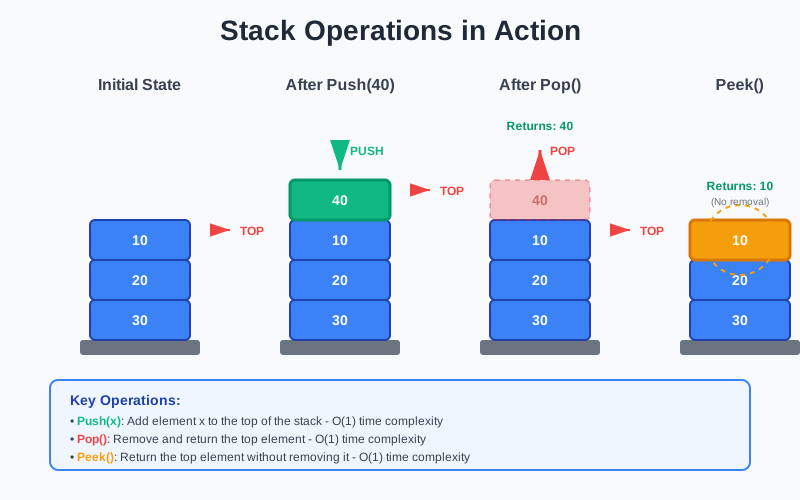
A stack supports these core operations:
- Push: Add an element to the top
- Pop: Remove and return the top element
- Peek/Top: Look at the top element without removing it
- isEmpty: Check if the stack is empty
The beauty of stacks lies in their simplicity. You only ever interact with one end—the top. This constraint is what makes them so powerful for specific use cases.
Real-World Stack Applications
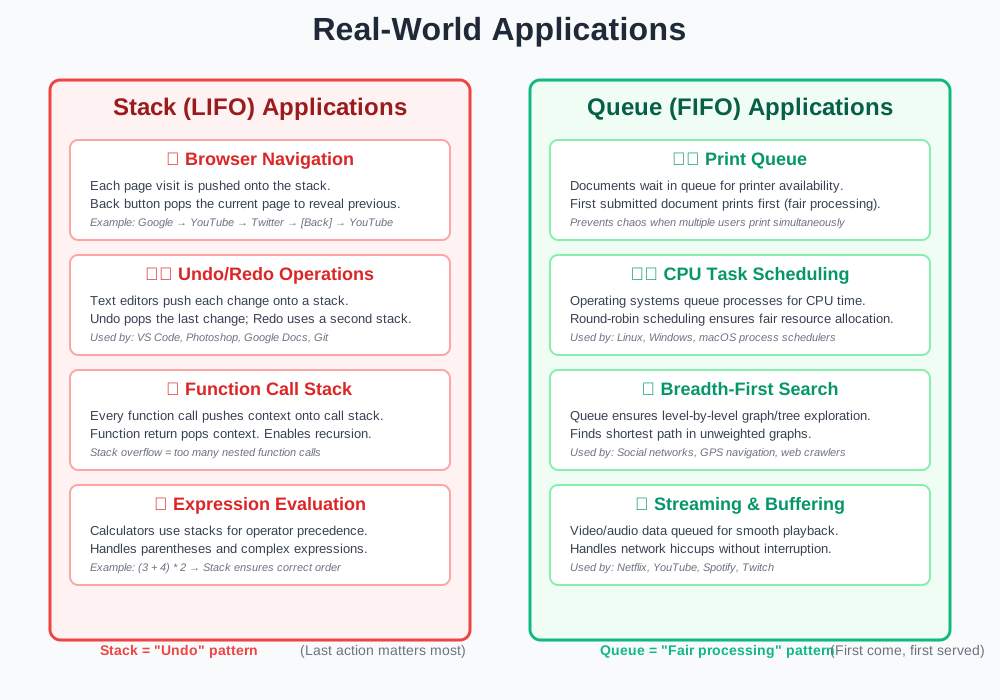
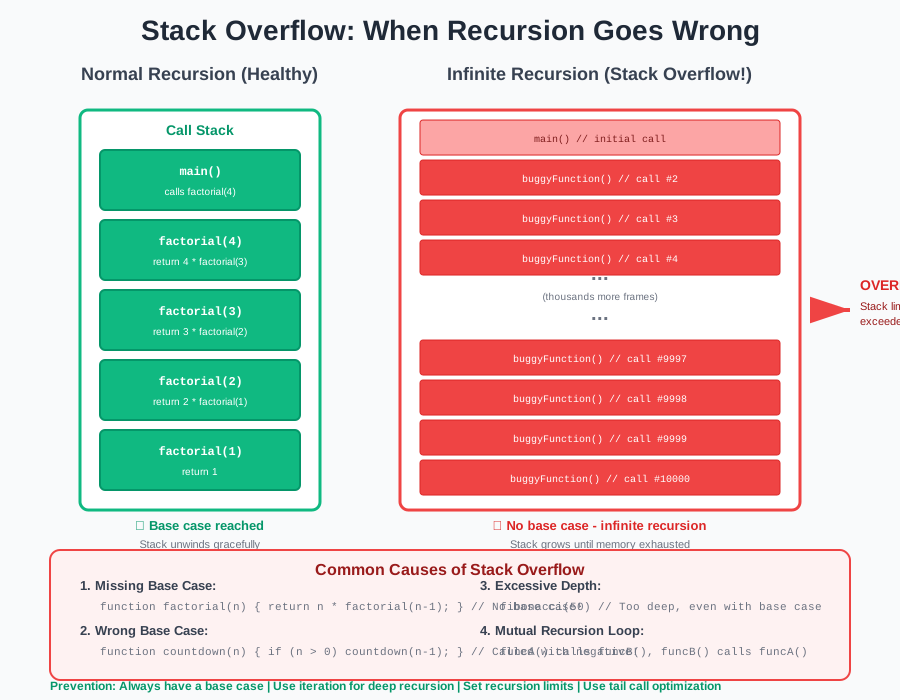
Function Call Management Every time you call a function, your program pushes the current context onto a call stack. When the function returns, it pops that context back. This is how recursion works and why you get “stack overflow” errors with infinite recursion.
Undo Operations Text editors, image editors, even Git—they all use stacks to track changes. Each action gets pushed onto the stack, and undo simply pops the last action.
Expression Evaluation Calculators use stacks to handle operator precedence and parentheses. When you type “3 + 4 * 2”, the calculator uses a stack to ensure multiplication happens before addition.
Browser Navigation Your browser’s back button? That’s a stack of visited pages. Each new page gets pushed on, and back button pops the current page to reveal the previous one.
Stack Pros and Cons
Pros:
- ✓ Simple and intuitive operations
- ✓ Constant time O(1) for push, pop, and peek
- ✓ Memory efficient—no wasted space
- ✓ Perfect for recursive algorithms
- ✓ Natural fit for “undo” type operations
Cons:
- ✗ Limited access—only top element available
- ✗ No random access to middle elements
- ✗ Can overflow if not managed properly
- ✗ Not suitable for scenarios needing FIFO behavior
Understanding Queues: First In, First Out (FIFO)
Now imagine a line at your favorite coffee shop. The first person in line gets served first—that’s fair, right? This is exactly how queues work: First In, First Out (FIFO).
How Queues Work
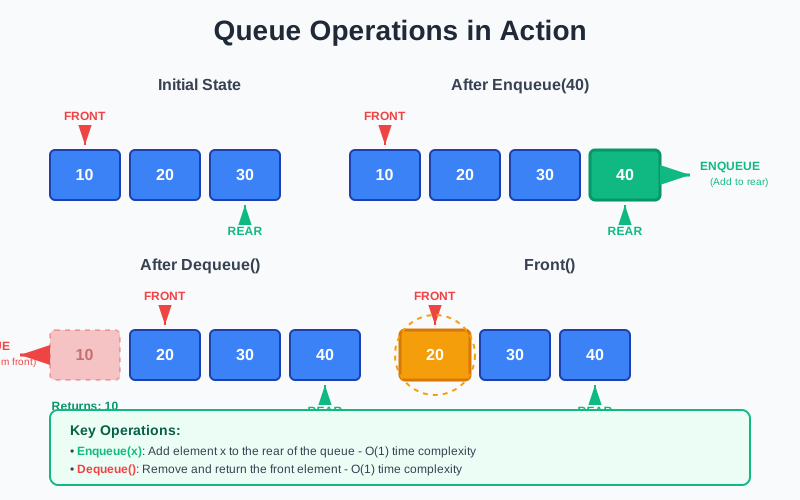
A queue supports these essential operations:
- Enqueue: Add an element to the rear/back
- Dequeue: Remove and return the front element
- Front: Look at the front element without removing it
- isEmpty: Check if the queue is empty
Unlike stacks, queues have two ends: you add at one end (rear) and remove from the other (front). This creates the fair, first-come-first-served behavior.
Real-World Queue Applications
Task Scheduling Operating systems use queues to manage processes fairly. When multiple programs need CPU time, they wait in a queue—first come, first served.
Print Queues Your office printer uses a queue to manage multiple print jobs. Documents get printed in the order they were submitted, preventing chaos.
Breadth-First Search (BFS) When exploring graphs or trees level by level, BFS uses a queue to keep track of which nodes to visit next. This ensures you explore all nodes at the current level before moving deeper.
Web Server Request Handling Web servers use queues to handle incoming requests fairly. During traffic spikes, requests wait in a queue rather than being dropped.
Streaming and Buffering Netflix, YouTube, and music streaming services use queues to buffer content. Data gets queued up to ensure smooth playback even with network hiccups.
Queue Pros and Cons
Pros:
- ✓ Fair processing—first come, first served
- ✓ Constant time O(1) for enqueue and dequeue
- ✓ Perfect for scheduling and buffering
- ✓ Natural fit for BFS algorithms
- ✓ Handles bursts of data gracefully
Cons:
- ✗ No random access to middle elements
- ✗ Requires tracking both front and rear pointers
- ✗ Can grow unbounded if not managed
- ✗ Not suitable for LIFO scenarios
Stack vs Queue: When to Use What?
Here’s the honest truth: choosing between stacks and queues isn’t about memorizing rules—it’s about understanding the natural flow of your problem.
Use Stacks When:
- You need to reverse or undo: Undo operations, backtracking algorithms
- You’re dealing with nested structures: Parsing expressions, managing function calls
- Last action matters most: Browser history, recursive algorithms
- You need to “unwind” operations: Depth-first search, expression evaluation
Use Queues When:
- Fairness matters: Task scheduling, request handling
- You need level-by-level processing: BFS, tree traversal by levels
- Order of arrival is important: Print queues, customer service systems
- You’re buffering data: Streaming, producer-consumer scenarios
Real-World Decision Examples
Building a Calculator? Use stacks for handling operator precedence and parentheses.
Building a Task Scheduler? Use queues to ensure fair processing of jobs.
Implementing Undo/Redo? Stack for undo operations, but you might need a second stack for redo.
Web Crawler? Queue for breadth-first crawling, stack for depth-first crawling.
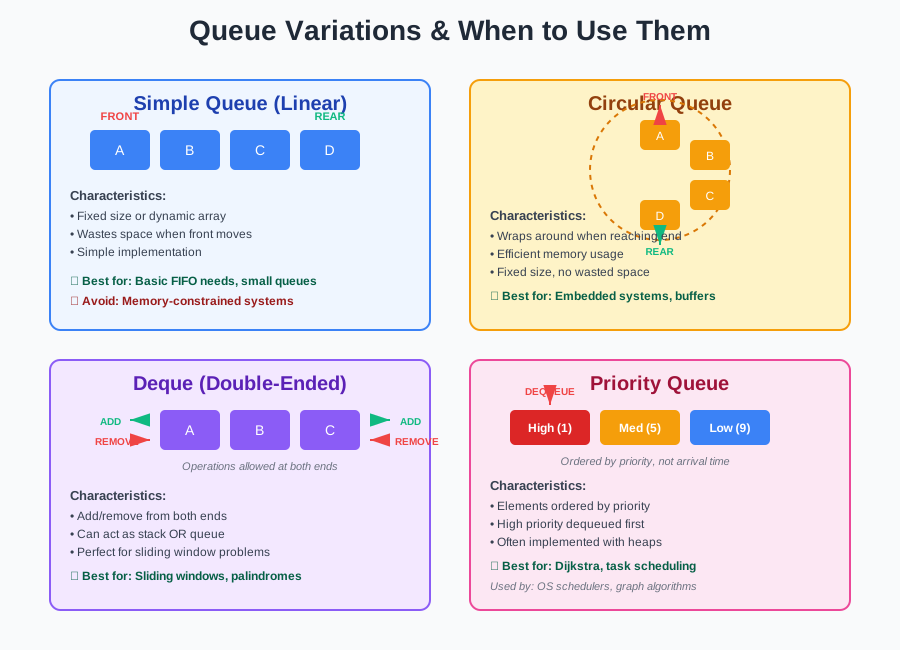
Advanced Variations You Should Know
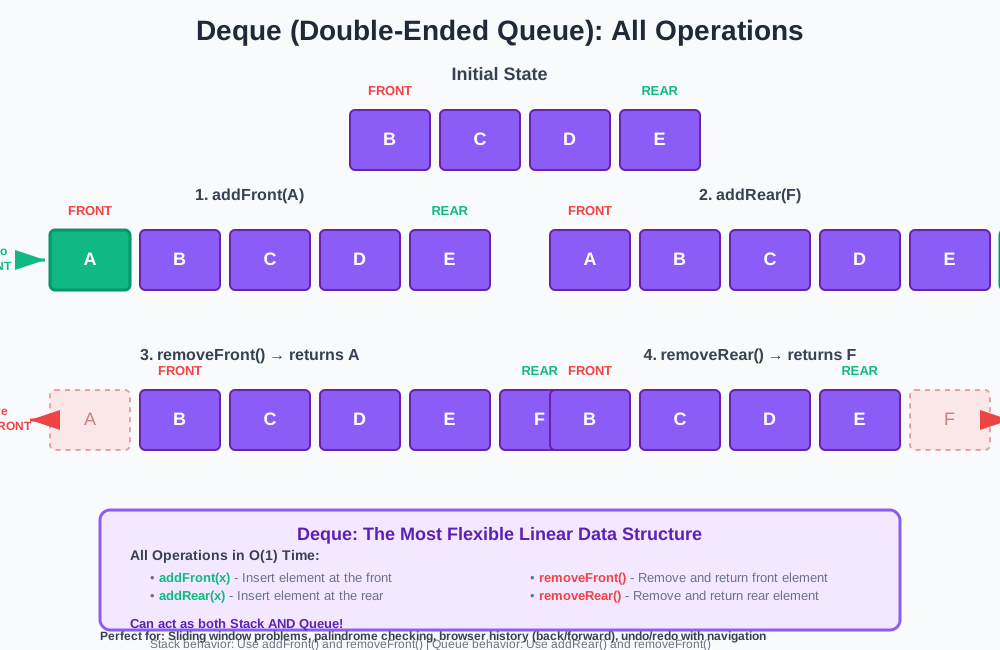
Deque (Double-Ended Queue)
Sometimes you need the flexibility of both stacks and queues. A deque lets you add and remove from both ends. Python’s collections.deque is perfect for sliding window problems and implementing both stacks and queues efficiently.
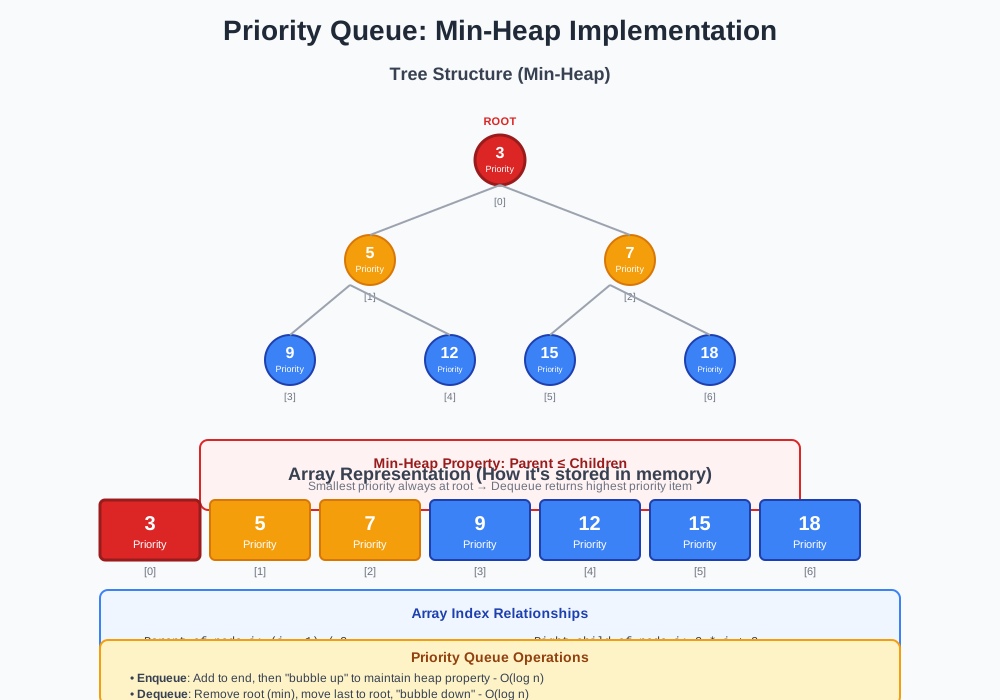
Priority Queue
Not all tasks are created equal. Priority queues let you process high-priority items first, regardless of arrival order. Think emergency room triage or operating system process scheduling.
Real-World Example: Dijkstra’s shortest path algorithm uses a priority queue to always explore the most promising path first.
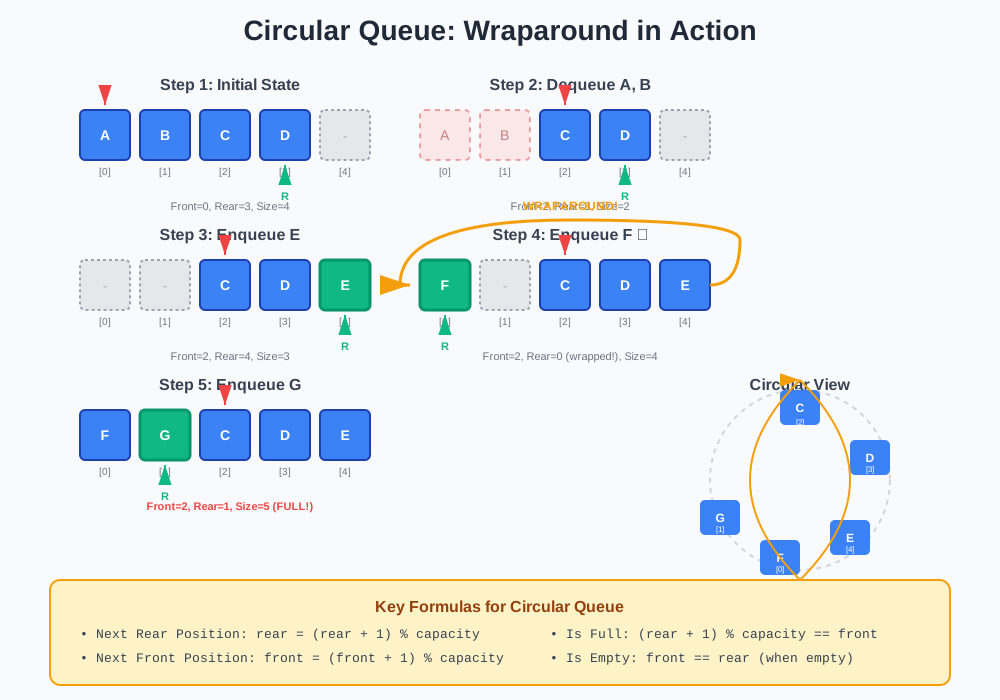
Circular Queue
When memory is limited, circular queues reuse space efficiently. Instead of shifting elements, you wrap around when you reach the end. Perfect for embedded systems and streaming buffers.
Implementation Considerations for Production
Memory Management
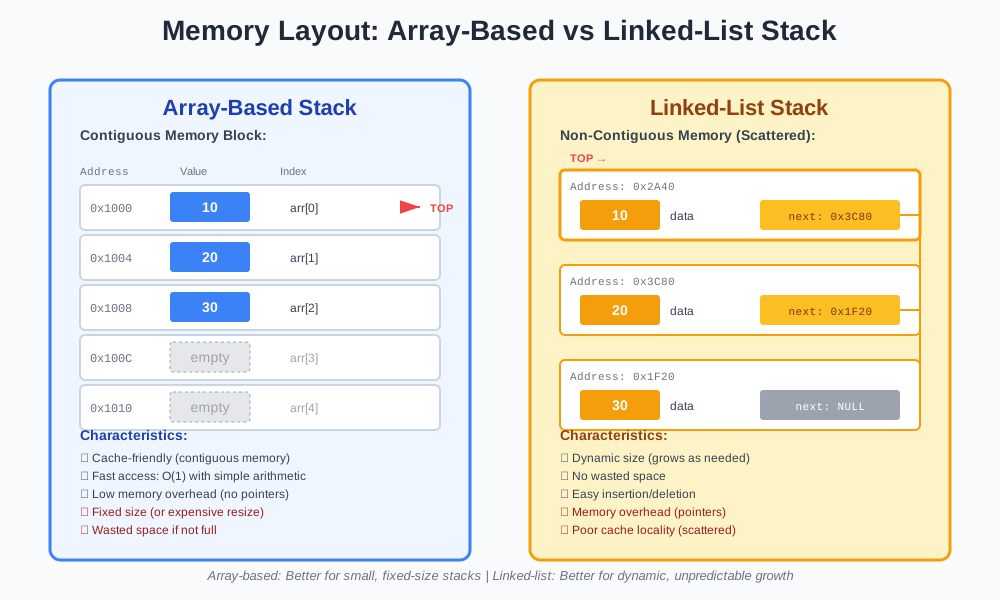
Arrays vs Linked Lists: Arrays give you cache locality but fixed size. Linked lists offer dynamic sizing but pointer overhead. Choose based on your access patterns and memory constraints.
Thread Safety
In multi-threaded environments, you need synchronized access. Java’s ConcurrentLinkedQueue and BlockingQueue handle this automatically. In other languages, you’ll need locks or lock-free implementations.
Capacity Planning
Bounded vs Unbounded: Unbounded structures can consume all available memory during traffic spikes. Bounded structures provide backpressure but need overflow handling strategies.
Performance Optimization
- Batch operations: Process multiple items at once when possible
- Memory pooling: Reuse objects instead of constant allocation
- Cache-friendly layouts: Consider memory access patterns for hot paths
Common Pitfalls and How to Avoid Them
Stack Overflow
The Problem: Infinite recursion or excessively deep call stacks crash your program.
The Fix: Set recursion limits, use iterative approaches for deep recursion, or implement tail call optimization.
Queue Memory Leaks
The Problem: Producers add faster than consumers remove, causing unbounded growth.
The Fix: Implement backpressure, use bounded queues, or add monitoring and alerts.
Empty Structure Access
The Problem: Popping from empty stacks or dequeuing from empty queues causes errors.
The Fix: Always check isEmpty() before operations, or use exception handling gracefully.
Race Conditions
The Problem: Multiple threads accessing the same structure simultaneously cause data corruption.
The Fix: Use thread-safe implementations or proper synchronization mechanisms.
Interview Preparation Tips
Common Stack Questions
- Valid Parentheses: Use stack to match opening and closing brackets
- Evaluate Postfix Expression: Stack-based calculator implementation
- Next Greater Element: Stack to find the next larger element in an array
- Implement Min Stack: Stack that supports getting minimum in O(1) time
Common Queue Questions
- Implement Queue using Stacks: Classic two-stack approach
- Sliding Window Maximum: Deque-based solution for efficient window operations
- Level Order Traversal: BFS using queue for tree/graph traversal
- Design Circular Queue: Efficient implementation with wraparound logic
What Interviewers Look For
- Understanding of LIFO vs FIFO: Can you explain when to use each?
- Implementation details: Array-based vs linked list implementations
- Edge case handling: Empty structures, overflow conditions
- Real-world applications: Can you connect concepts to practical problems?
The Big Lessons
Stacks and queues aren’t just data structures—they’re fundamental patterns for managing order and flow in systems. Master these, and you’ll start recognizing them everywhere in software design.
The key insight? Constraints create power. By limiting how you can access data (only the top for stacks, only the ends for queues), these structures become incredibly efficient and intuitive for specific problems.
Don’t just memorize the operations—understand the natural flow of your problem. Does it feel like unwinding or undoing? Think stack. Does it feel like fair processing or level-by-level exploration? Think queue.
The Bottom Line
Every senior developer I know has these patterns burned into their muscle memory. Not because they memorized textbook definitions, but because they’ve seen how elegant the right data structure makes complex problems simple.
Start with the basics: implement a stack and queue from scratch. Then look for them in the wild—your browser, your text editor, your favorite apps. Once you start seeing these patterns, you’ll never unsee them.
Ready to dive deeper into data structures? Let’s talk about your specific learning goals and challenges.
Comments & Discussion
Join the conversation! Share your thoughts, ask questions, or provide feedback below.